Proteins: Structure and Function
Understanding amino acids, protein synthesis, and the biological roles of proteins in human physiology.
Understanding amino acids, protein synthesis, and the biological roles of proteins in human physiology.
Proteins are polymers of amino acids—organic molecules containing an amino group, a carboxyl group, and a distinctive side chain. Twenty proteinogenic amino acids combine in varying sequences to create the thousands of distinct proteins functioning within human cells. This structural diversity directly determines protein function.
Unlike carbohydrates (primarily energy substrates) or lipids (structural and signaling), proteins serve multiple simultaneous roles: enzymatic catalysis, structural support, immune defense, hormone signaling, transport mechanisms, and metabolic regulation. Understanding protein nutrition requires recognizing that dietary protein intake directly supplies the amino acid precursors necessary for synthesizing these diverse functional molecules.
Essential Amino Acids cannot be synthesized by human metabolism and must be obtained through diet. There are nine essential amino acids that humans cannot produce.
Non-Essential Amino Acids can be synthesized from other amino acids, carbohydrates, and nitrogen sources, though dietary supply remains beneficial for reducing metabolic burden.
Conditionally Essential amino acids become essential during periods of illness, injury, or intense physical stress when synthesis cannot meet demand.
This classification is critical: dietary protein quality depends on providing all essential amino acids in proportions matching human requirements. Animal proteins typically contain complete essential amino acid profiles; plant proteins often have limiting amino acids requiring dietary complementation.
Enzymes are proteins catalyzing biochemical reactions. Each digestive enzyme, metabolic pathway enzyme, and regulatory protein requires intact amino acid sequences for function.
Collagen, keratin, and muscle proteins provide structural support and mechanical properties. Skin, bone, cartilage, and connective tissue depend on continuous protein synthesis and remodeling.
Antibodies, complement proteins, and immune signaling molecules are proteins. Adequate amino acid availability directly supports immune competence and response capacity.
Many hormones are proteins or peptides. Insulin, growth hormone, and thyroid hormones depend on adequate protein nutrition for synthesis and function.
Dietary protein undergoes sequential enzymatic breakdown: pepsin in the stomach initiates proteolysis; pancreatic proteases (trypsin, chymotrypsin) complete breakdown in the small intestine; brush-border peptidases finish fragmentation into absorbable units.
Amino acids and small peptides are absorbed primarily in the jejunum through specific transporter proteins. Efficiency varies with food matrix, preparation method, and individual digestive health. Food combinations influence absorption: adequate carbohydrate intake can enhance amino acid absorption by stimulating insulin release and reducing amino acid oxidation.
Proteinogenic amino acids found in human proteins
Essential amino acids that must be obtained from diet
Recommended daily protein intake per body weight (varies by activity)
Animal-Based Proteins: Meat, fish, dairy, and eggs contain complete amino acid profiles closely matching human requirements. They provide high biological availability with minimal antinutrient content.
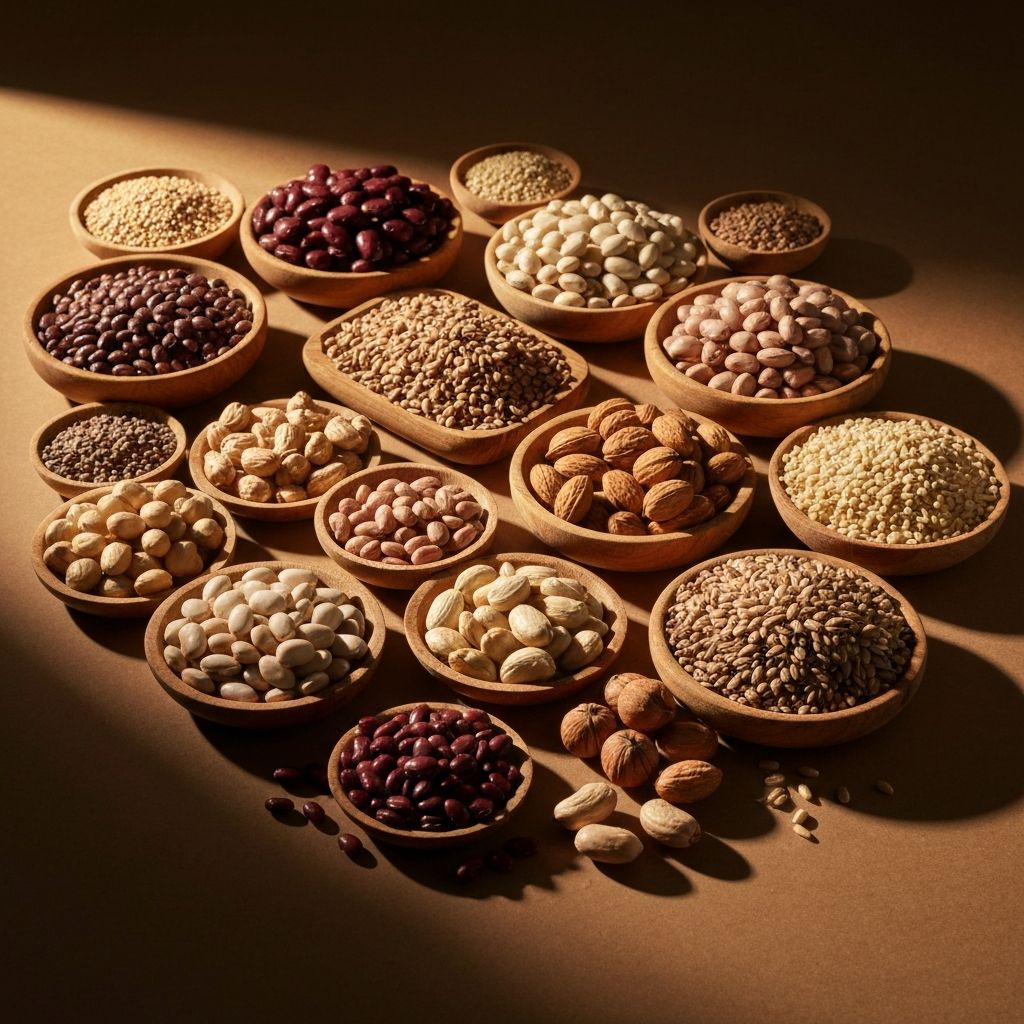
Plant-Based Proteins: Legumes, nuts, seeds, and grains provide amino acids but often have limiting amino acids. Complementary pairing (legumes with grains) or diverse intake over time ensures complete amino acid profiles.
Protein Quality Measurement: Biological value, protein efficiency ratio, and PDCAAS (Protein Digestibility-Corrected Amino Acid Score) quantify protein utility. Higher scores indicate amino acid profiles more efficiently supporting human protein synthesis.
The human body is not static. Skeletal muscle, organ tissues, skin, and immune cells undergo continuous remodeling. Rates of protein synthesis and breakdown vary across tissues—muscle protein turnover occurs over days to weeks; intestinal epithelial cells turn over every 3-5 days; blood cells require continuous replacement.
Adequate dietary protein supports these turnover processes. Insufficient intake results in negative nitrogen balance, where breakdown exceeds synthesis—a state associated with muscle loss, impaired immune function, and delayed healing. Conversely, protein intake alone cannot drive muscle synthesis without adequate resistance stimulus and energy availability.